be5invis/
View on GitHubVersatile typeface for code, from code.
Versatile typeface for code, from code.
Iosevka [ˌjɔˈseβ.kʰa] is an open-source, sans-serif + slab-serif, monospace + quasi‑proportional typeface family, designed for writing code, using in terminals, and preparing technical documents.
curl -s 'https://api.github.com/repos/be5invis/Iosevka/releases/latest' | jq -r ".assets[] | .browser_download_url" | grep PkgTTC-Iosevka | xargs -n 1 curl -L -O --fail --silent --show-error
sudo fc-cache.Disclaimer: This repository does not maintain any package manager distribution. The packages listed below may not always be up-to-date.
brew install --cask font-iosevka
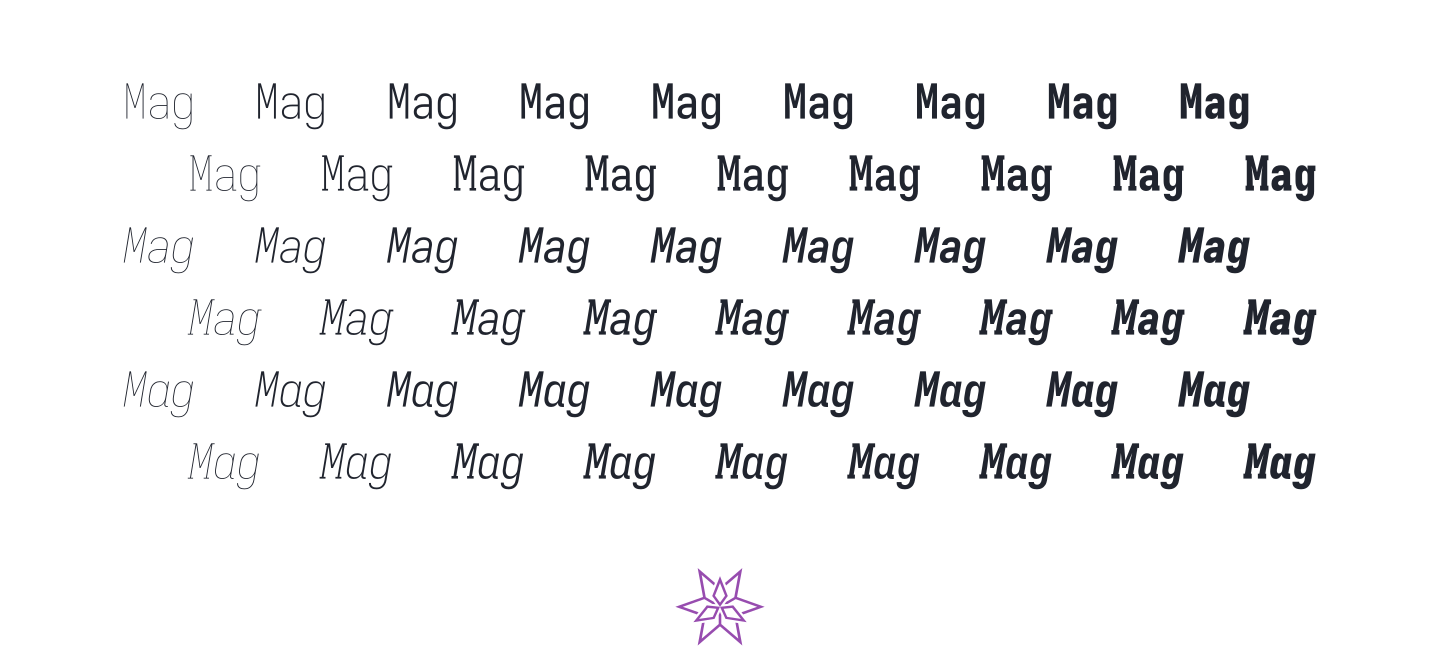
brew search font-iosevka and install what you want.xbps-install font-iosevka.dnf search iosevka to discover available fonts and dnf install to install the chosen one(s).zypper se 'iosevka*fonts' to discover available fonts, and zypper in to install the chosen one(s).pkg install iosevka.pkg_info -Q iosevka to see which Iosevka packages are available. Use pkg_add to install the chosen package(s).In the official package, Iosevka provides 6 monospace subfamilies (sans-serif and slab-serif, each in the 3 spacings Default, Term and Fixed) and 2 quasi-proportional subfamilies (Aile (sans-serif) and Etoile (slab-serif)). In all the monospace subfamilies, 9 weights (Thin to Heavy), 2 widths (Normal and Extended), and 3 slopes (Upright, Italic and Oblique) are included. In the quasi-proportional subfamilies, the quantity of widths is reduced to 1.
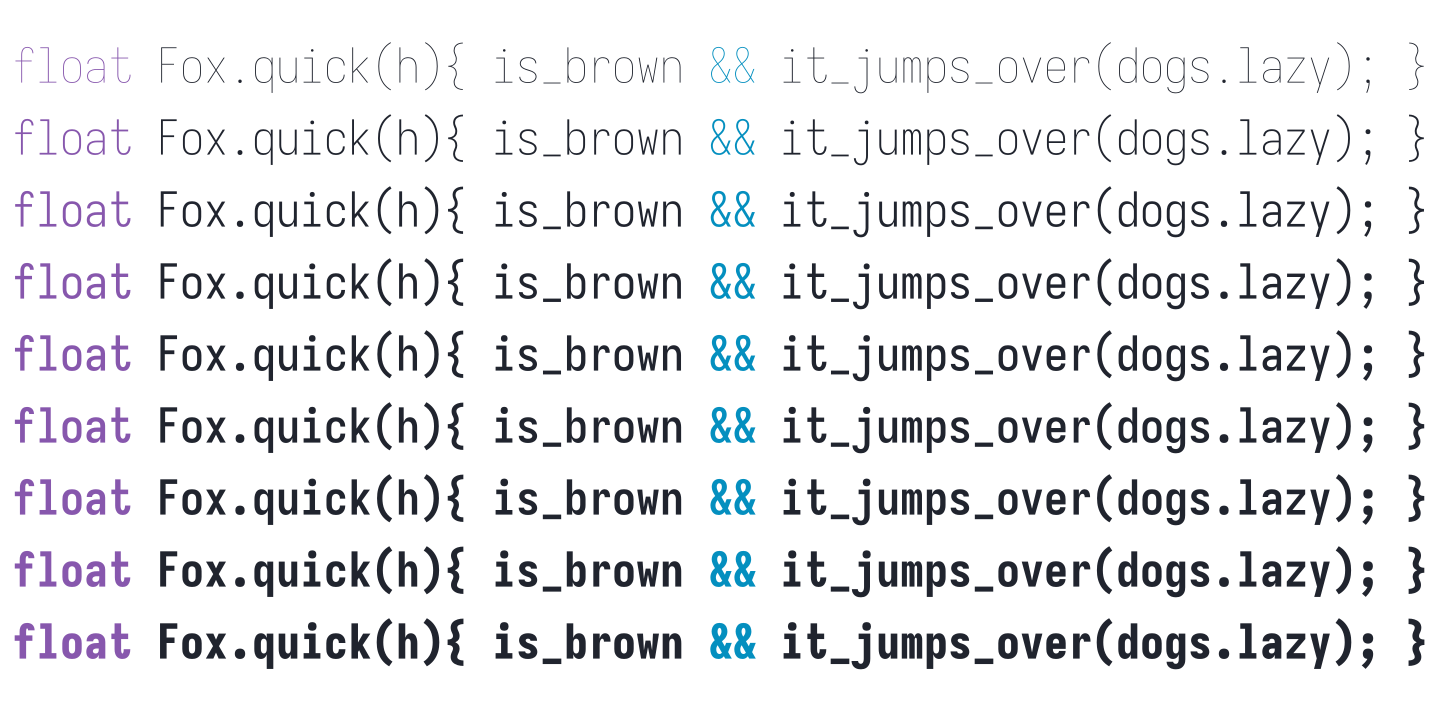
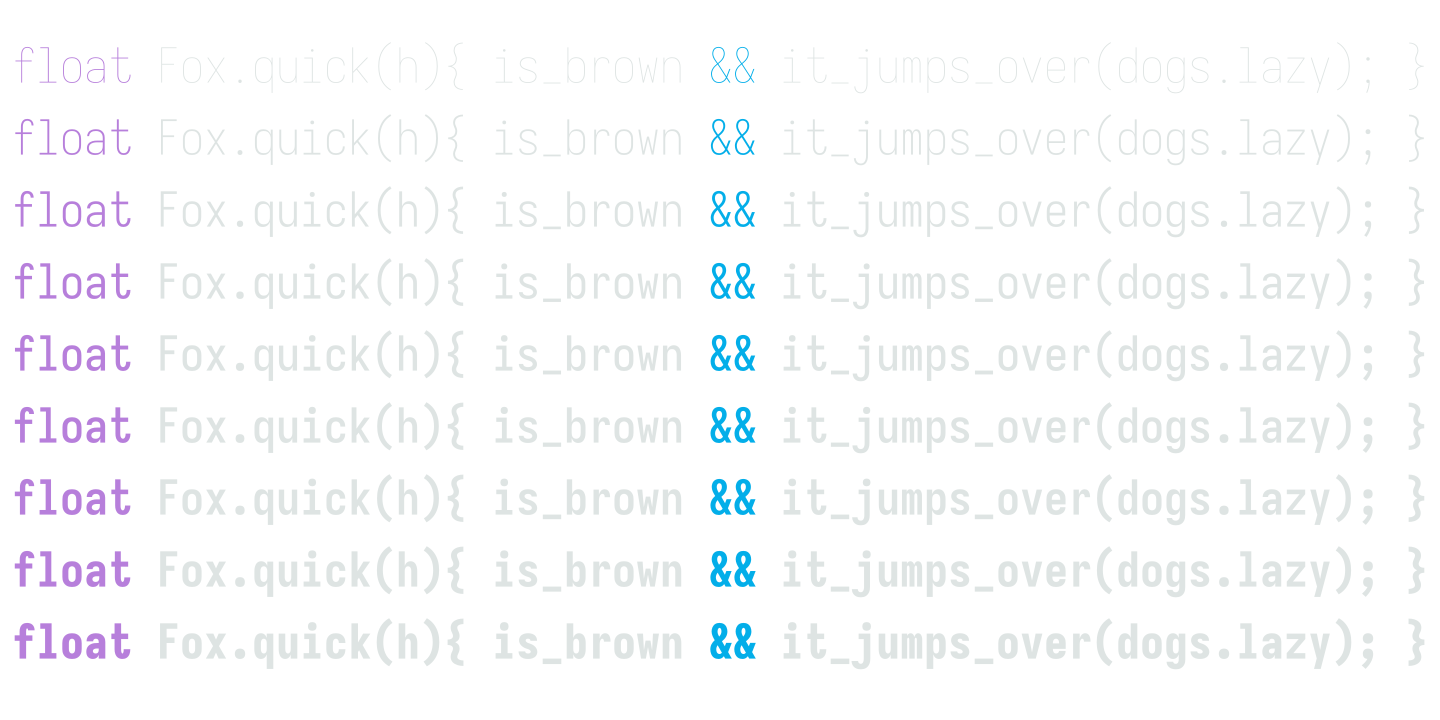
All versions include the same ranges of characters: Latin letters, Greek letters (including Polytonic), some Cyrillic letters, IPA symbols and common punctuations and some symbols. You can check out the full list here.
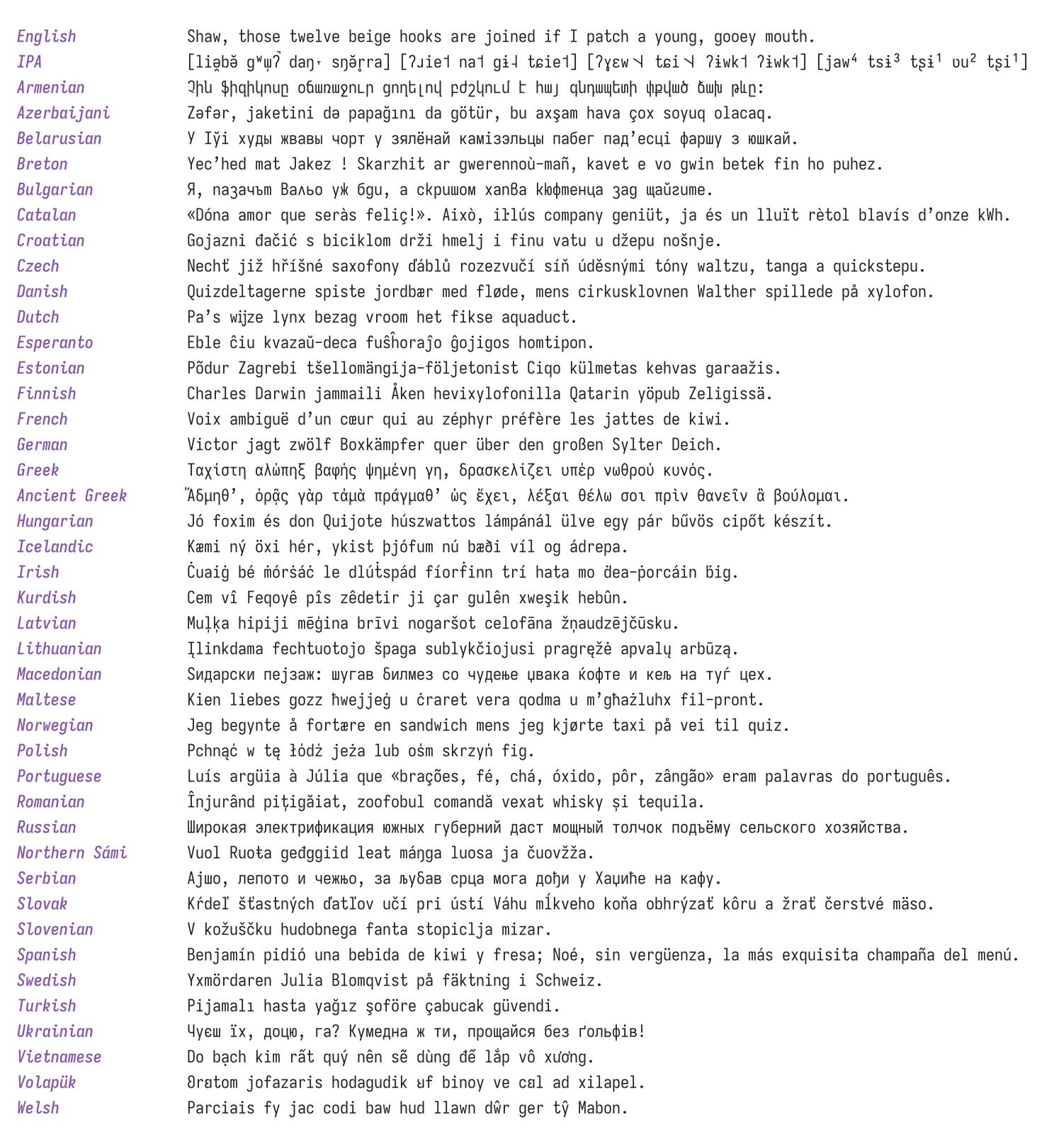
248 Supported Languages:
Abkhazian, Afar, Afrikaans, Aghem, Akan, Akoose, Albanian, Anii, Aragonese, Armenian, Asturian, Asu, Atsam, Azerbaijani, Bafia, Baluchi (bal_latn), Bambara, Basaa, Bashkir, Basque, Belarusian, Bemba, Bena, Betawi, Bosnian, Breton, Bulgarian, Buriat, Caddo, Catalan, Cebuano, Central Atlas Tamazight, Chechen, Chickasaw, Chiga, Chinese (zh_latn), Choctaw, Church Slavic, Chuvash, Colognian, Cornish, Corsican, Croatian, Czech, Danish, Duala, Dutch, Embu, English, Erzya, Esperanto, Estonian, Ewe, Ewondo, Faroese, Filipino, Finnish, French, Friulian, Fula, Ga, Galician, Ganda, German, Greek, Guarani, Gusii, Haitian Creole, Hausa, Hawaiian, Hindi (Latin), Hungarian, Icelandic, Ido, Igbo, Inari Sami, Indonesian, Interlingua, Interlingue, Inuktitut (iu_latn), Irish, Italian, Javanese, Jju, Jola-Fonyi, Kabuverdianu, Kabyle, Kaingang, Kako, Kalaallisut, Kalenjin, Kamba, Kara-Kalpak, Kazakh, Kenyang, Kikuyu, Kinyarwanda, Konkani (kok_latn), Koyra Chiini, Koyraboro Senni, Kpelle, Kurdish, Kuvi, Kwasio, Kyrgyz, Kʼicheʼ, Lakota, Langi, Latgalian, Latin, Latvian, Laz, Ligurian, Lingala, Lithuanian, Lojban, Lombard, Low German, Lower Sorbian, Luba-Katanga, Lule Sami, Luo, Luxembourgish, Luyia, Macedonian, Machame, Makhuwa, Makhuwa-Meetto, Makonde, Malagasy, Malay, Maltese, Manx, Mapuche, Masai, Meru, Metaʼ, Mi'kmaw, Mohawk, Moksha, Mongolian, Morisyen, Mundang, Muscogee, Māori, Nama, Navajo, Ngiemboon, Ngomba, Nheengatu, Nigerian Pidgin, North Ndebele, Northern Frisian, Northern Sami, Northern Sotho, Norwegian, Norwegian Bokmål, Norwegian Nynorsk, Nuer, Nyanja, Nyankole, Obolo, Occitan, Okanagan, Oromo, Ossetic, Pali, Papiamento, Piedmontese, Pijin, Polish, Portuguese, Prussian, Quechua, Qʼeqchiʼ, Riffian, Romanian, Romansh, Rombo, Rundi, Russian, Rwa, Saho, Samburu, Samogitian, Sango, Sangu, Sardinian, Scottish Gaelic, Sena, Serbian, Shambala, Shona, Sicilian, Sidamo, Silesian, Skolt Sami, Slovak, Slovenian, Soga, Somali, South Ndebele, Southern Sami, Southern Sotho, Spanish, Sundanese, Swahili, Swati, Swedish, Swiss German, Tachelhit (shi_latn), Taita, Tajik, Taroko, Tasawaq, Tatar, Teso, Tok Pisin, Toki Pona, Tongan, Tsonga, Tswana, Turkish, Turkmen, Tuvinian, Tyap, Ukrainian, Upper Sorbian, Uzbek, Vai (vai_latn), Venda, Venetian, Vietnamese, Volapük, Vunjo, Walloon, Walser, Warlpiri, Welsh, Western Frisian, Wolof, Xhosa, Yakut, Yangben, Yoruba, Zarma, Zhuang, Zulu
Monospace Iosevka contains various stylistic sets to change the shape of certain characters. Enabling corresponded OpenType feature to enable.
Alongside stylistic sets, Monospace Iosevka can also be configured to cherry-pick variants for each character using OpenType. The variants are shown below. To enable, assign the feature tag to the variant index. For example, setting cv26 to 6 will enable single-storey a.
Caution : Certain software may limit the quantity of OpenType features and drop some of them if the feature list is too long. Please validate your feature configuration to ensure that it worked in your software.
Monospace subfamilies support ligations. Iosevka’s default ligation set is assigned to calt feature, though not all of them are enabled by default.
Iosevka supports Language-Specific Ligations, which is the ligation set enabled only under certain languages. These ligation sets are assigned to custom feature tags. To use them, you need to turn off calt and enable the corresponded feature. The feature list is:
Please note that, due to the complex interactions when forming ligations, cherry-picking ligation groups will require a custom Iosevka build. The instructions could be seen below.
No comments yet. Set the tone — say what you would want to know.